 0
0
 0
0
www.shackvideo.com – Context usually feels invisible until something goes wrong. That proved true near Temple this Earth Day, when a local celebration at Elizabeth’s Farm met unexpected storm clouds. On paper, the event appeared simple: gather neighbors, plant trees, share knowledge, honor the planet. In practice, wet fields, dark skies, and safety concerns nearly erased weeks of planning in a single gust of wind.
Within that shifting context, volunteers refused to treat cancellation as an ending. Instead, they treated it as a plot twist. Muddy boots, soaked flyers, and abandoned tables became the backdrop for a different kind of story. Rather than fold up the day, they rewrote its purpose, showing how context can shape—though not define—the impact of local climate action.
When Weather Rewrites the Context
Every event exists inside a broader context, even when we overlook it. For the Earth Day gathering at Elizabeth’s Farm, organizers expected mild skies and a steady stream of visitors from Temple and nearby communities. Forecasts suggested occasional showers, nothing alarming. Banners went up, seedlings arrived, volunteers reviewed schedules. The context appeared routine, almost boring, which, for an outdoor event, is ideal.
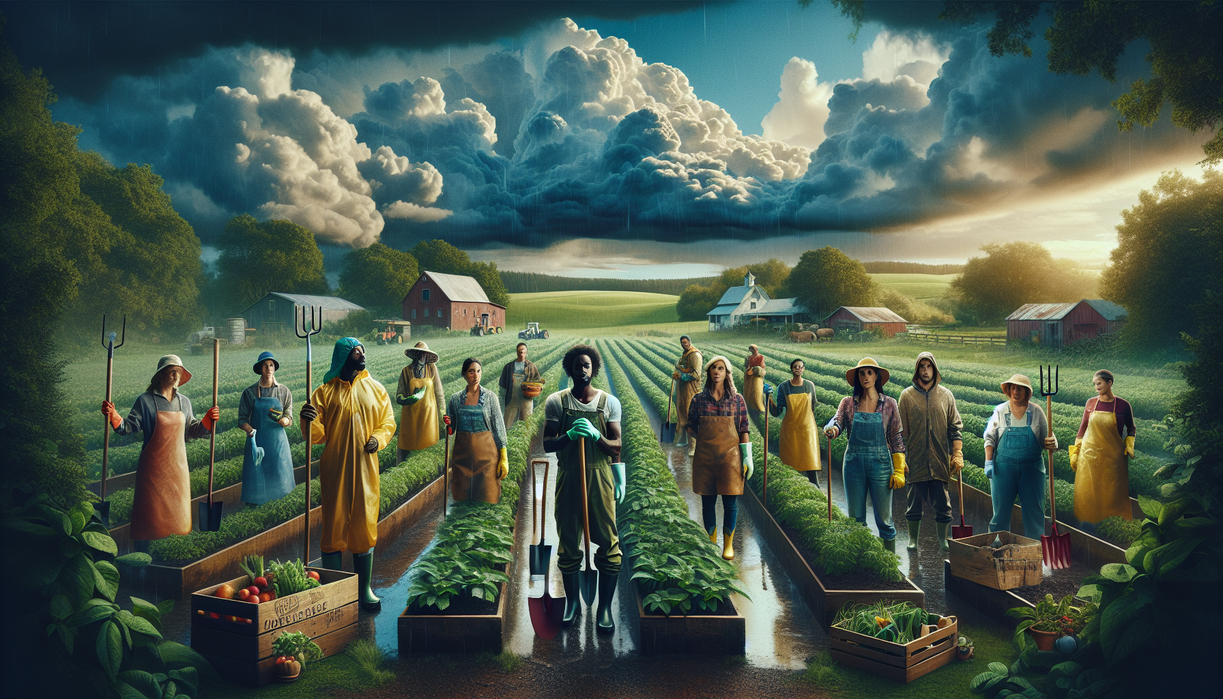
Then the atmosphere changed. Clouds rolled across the fields with a pace impossible to ignore. Gusts rattled tents, rain thickened, and the feel of the place shifted from festival to hazard. Suddenly the context was not about celebration, but about safety and logistics. Cars slipped in the mud, parents shielded children, coordinators checked phones for weather alerts. The same space that looked inviting an hour earlier now felt unstable.
Out of that chaos, a question surfaced: What does Earth Day mean under this new context? If nature disrupts a gathering meant to honor nature, is the day ruined, or redefined? Many events stop at liability concerns and rescheduling emails. Yet at Elizabeth’s Farm, volunteers sensed a chance to respond creatively. Rather than see the storm as an interruption, they treated it as part of the story of living with a changing climate.
Adapting Efforts to a Shifting Reality
The first instinct after the call to cut activities short was disappointment. Weeks of coordination seemed to evaporate in the rain. Still, context again played a crucial role. Volunteers recognized that their mission extended beyond a single afternoon. Earth Day lives inside a larger environmental timeline, not a rigid calendar box. That realization reframed everything that followed.
Instead of simply packing up, teams gathered under partially collapsed canopies and inside vehicles to reorganize. Seedlings set aside for public planting were redirected to on-site restoration efforts. Educational materials moved online through group chats, social platforms, and neighborhood email lists. The physical context shifted from community fair to impromptu command center, yet the core values behind the event remained surprisingly intact.
My own perspective is that this kind of pivot matters more than a flawless schedule. In the context of climate disruption, flexibility is not a luxury; it is a survival skill. Weather extremes will challenge more local efforts in the coming years. The way Elizabeth’s Farm volunteers treated cancellation as transformation, rather than defeat, offers a template for others. The context may turn against your plans, but your response still belongs to you.
Lessons from a Canceled Event That Never Really Ended
Seen from a distance, the story of this Earth Day near Temple looks simple: an outdoor event, bad weather, partial cancellation. Yet a closer look reveals a richer context, one filled with choices. Organizers chose to view the storm as a live demonstration of environmental vulnerability. Volunteers chose to keep working, just in different ways. Community members chose to stay connected through digital tools and follow-up gatherings. My takeaway is that context will keep shifting—through climate patterns, social conditions, and personal lives. We cannot control every cloud, but we can decide how to respond when the sky darkens. That reflective stance turns a disrupted Earth Day into an honest reminder: real environmental commitment shows itself not in perfect conditions, but in what happens when conditions fall apart.


Related Posts