 0
0
 0
0
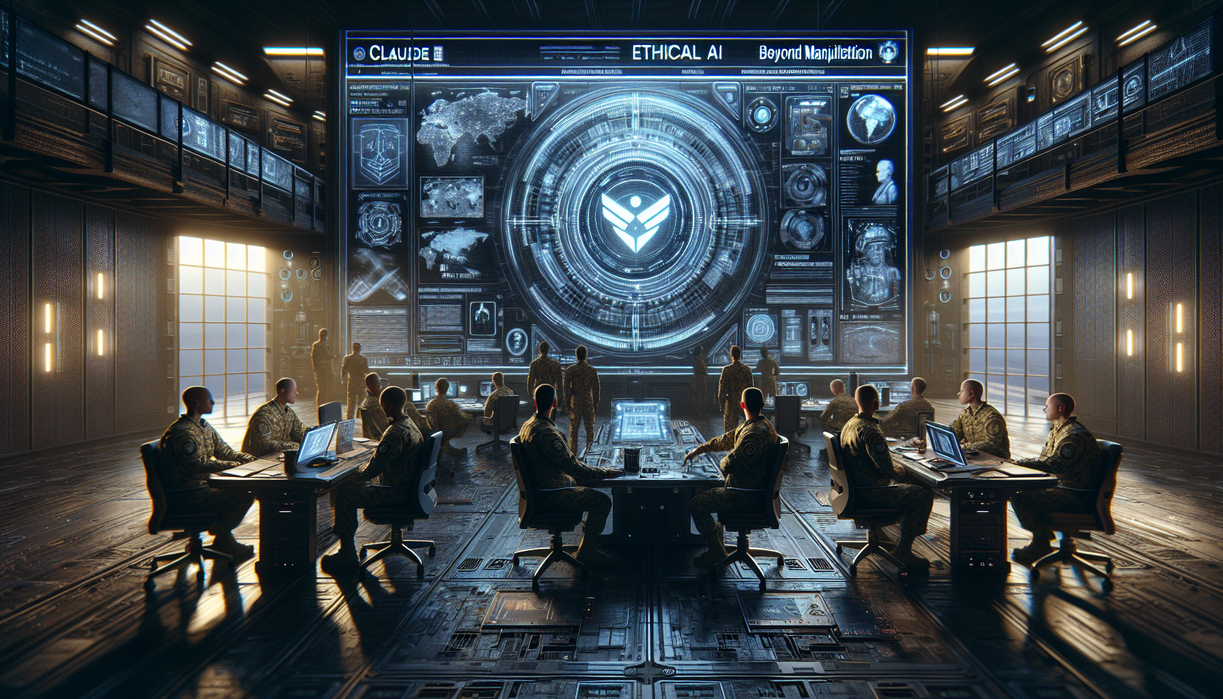
www.shackvideo.com – The phrase ai anthropic trump security risk now sits at the center of a heated clash between Silicon Valley and Washington. At issue is a simple but unsettling question: once advanced AI tools sit inside classified Pentagon systems, who truly controls them? Anthropic, the company behind the Claude model, has pushed back hard against claims from government lawyers that the firm can quietly tweak or redirect its technology after deployment.
This dispute is more than a technical argument. It shows how fear of an ai anthropic trump security risk feeds into existing anxieties about digital warfare, espionage, and political power. As the Pentagon leans further into AI for analysis and decision support, the stakes rise sharply. If oversight, contracts, and understanding of the tech remain vague, security debates will only grow louder.
Pentagon Control Claims Versus Anthropic’s Rebuttal
At the heart of the courtroom battle is a bold assertion from Pentagon attorneys. They implied Anthropic could retain a special back door into its Claude model, even after the software integrates with classified defense systems. That narrative suggests a clear ai anthropic trump security risk: a private actor, or even a future administration, might shape sensitive outputs from afar. Anthropic responded by stressing that once Claude is embedded inside secure infrastructure, remote modification is not possible without government knowledge.
From a technical point of view, Anthropic argued the deployed instance of Claude functions like sealed software. Any major adjustment would require deliberate updates, review, and reinstallation, not stealthy tinkering. This perspective challenges the notion that AI vendors retain magical dials over live military tools. It also exposes how easily lawyers, policymakers, and the public can misinterpret AI capabilities, then project worst-case fears onto complex systems.
However, perception often matters more than code in security debates. Once the label ai anthropic trump security risk circulates through headlines, nuance gets lost. A claim that the firm could secretly change outputs morphs into a story about hidden influence and political leverage. That makes it harder for technologists to explain what is actually possible, and easier for opponents to frame AI providers as shadowy power brokers hovering over national defense.
How Politics Fuels the AI Anthropic Trump Security Risk Narrative
Security concerns rarely exist in a vacuum; partisan struggle reshapes them. The phrase ai anthropic trump security risk does double duty. It raises questions about technical vulnerabilities while hinting at fears over how a future Trump administration might use or pressure AI vendors. Even if the courtroom issue focuses on control over Claude, the wider conversation circles back to power, loyalty, and information warfare.
Some critics worry that any administration, including a Trump-led one, could push contractors to tune AI tools toward favored narratives or policy goals. That fear builds on past controversies about social media moderation, surveillance, and weaponized data. When Anthropic insists it cannot secretly revise code inside Pentagon networks, it is not just defending its architecture. It is also pushing back against suspicion that private AI companies might quietly align outputs with shifting political winds.
My own view is that the ai anthropic trump security risk story risks flattening a layered reality. Yes, political pressure over AI will intensify. Yes, contractors may face requests to alter models before deployment or during scheduled updates. Yet that process would leave trails: contracts, technical change logs, and review workflows. The true threat lies less in invisible control panels and more in opaque procurement, weak oversight, and public ignorance about how these systems actually evolve.
Beyond Fear: Rethinking AI, Power, and Accountability
Stepping back, the Anthropic–Pentagon clash should push us to refine norms rather than chase cartoons of omnipotent AI vendors. Treating every advanced system as an imminent ai anthropic trump security risk may win headlines, but it does little to improve safety. Instead, defense contracts should spell out who can modify models, under which conditions, and with what documentation. Independent audits, red-teaming, and clear reporting channels can replace vague suspicion with structured accountability. In my perspective, the long-term challenge is not just whether Anthropic can edit Claude once it sits on a classified server. It is whether citizens, lawmakers, and technologists can build a governance framework honest enough to admit real dangers, restrained enough to resist panic, and flexible enough to adapt as AI reshapes security itself.


Related Posts