
 0
0
 0
0
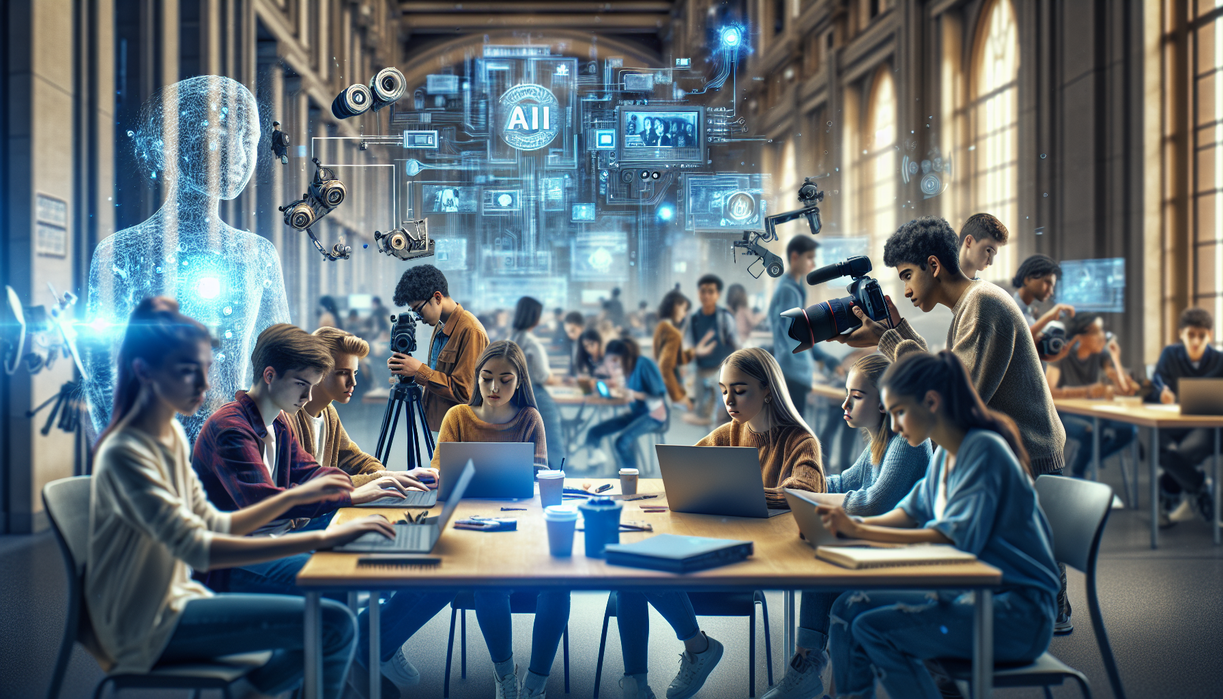
www.shackvideo.com – Media and communication classrooms once revolved around tripods, tape recorders, and basic editing software. Now, high school students arrive already holding production studios in their pockets, while artificial intelligence quietly rewrites how content is researched, written, filmed, and shared. At Atlantic Cape’s Early College Media Day, nearly 100 teenagers confronted a big question: how can human creativity stay central when algorithms shape so much of what we see and hear?
The event gathered local students curious about media and communication careers, A.I. tools, and new storytelling formats. Instead of treating technology as either miracle or menace, the day invited honest debate. Is A.I. a shortcut that weakens skills, or a collaborator that frees people to think bigger? The most interesting answers emerged not from lectures, but from student conversations and experiments.
Media and Communication Meets a New Creative Partner
For many teenagers, media and communication is not just a school subject; it is a fluent language. They already script TikToks, host podcasts from bedrooms, and design graphics between homework assignments. At Media Day, these habits turned into serious exploration of careers in journalism, film, social media strategy, and public relations. Industry guests described how newsrooms, studios, and agencies now expect young hires to understand A.I. as naturally as they understand social platforms.
Workshops showed how A.I. tools can speed up repetitive parts of media and communication work. Students experimented with caption generators, basic transcript tools, and content planners powered by machine learning. One small group compared raw interview notes with summaries drafted by an A.I. assistant. They realized the software captured facts quickly yet missed subtle emotion, tone shifts, and offhand remarks that often make the strongest quotes.
That gap sparked deeper reflection. If A.I. handles routine tasks, what becomes the core human skill in media and communication? Students kept returning to the same idea: judgment. Choosing which stories matter, which voices must be heard, which images respect their subjects rather than exploit them. Technology can offer options, but only people decide whether a story is ethical, accurate, and meaningful for real audiences.
Learning to Balance Efficiency with Authentic Voice
Several sessions highlighted a tricky tension. A.I. promises speed, consistency, and endless variations of content. Yet media and communication thrives on unique voice and lived experience. One student described using an A.I. script tool for a short documentary. The outline looked impressive, but every character sounded similar, as if they shared one personality. The class then rewrote the script, layering personal slang, local references, and emotional nuance back into the dialogue.
This exercise revealed an important pattern. When students used A.I. first then tried to personalize later, the results often felt flat. When they began with their own ideas, then asked tools to assist with structure or polish, the final projects felt far more original. Media and communication educators at the event encouraged this second approach: lead with human perspective, treat A.I. as support, not as author.
From my perspective, the healthiest mindset sees A.I. as a sharp but limited intern. It can search archives faster than any student, suggest headlines, or organize raw notes. Yet it has no childhood memories, no embarrassment, no friendships, no fear about the future. Media and communication becomes powerful precisely because storytellers carry those emotions into their work. Students who recognize that difference gain an advantage. They can use digital tools aggressively while protecting the irreplaceable human layer that audiences actually connect with.
Ethics, Bias, and Responsibility in Student Storytelling
Another major theme at Media Day was responsibility. Media and communication already shapes public opinion, self-image, and community trust. Add A.I. to that mix, and ethical stakes rise quickly. Students learned that many training datasets reflect old prejudices. If a generative tool suggests only certain types of faces for a “professional” photo, or rewrites quotes to fit stereotypes, creators must push back. Several teens said they felt uneasy letting code handle voices from vulnerable communities without careful oversight. Many left convinced that authentic participation beats automated representation. For them, the future of media and communication belongs to storytellers who ask tough questions of their tools, stay transparent with audiences, and protect the dignity of real people at the center of every narrative.


Related Posts